
Most salons in Saudi Arabia treat client intake forms as administrative paperwork — something a new client fills in once and files away. This is a missed opportunity on multiple levels.
A well-designed intake and consultation process is not just a form. It is the first real conversation you have with a client about their needs, concerns, and expectations. It is what allows your stylist or therapist to give a service that is genuinely personalized rather than generic. And it is what protects your salon when a client has a reaction to a product or a contraindicated service.
This guide covers how to design, implement, and use intake forms and client consultations effectively in your salon, spa, or medspa.
What Is a Salon Intake Form?
A salon intake form is a document (paper or digital) that captures key information about a new client before their first service. Depending on your service type, it may include:
- Personal information: Name, phone number, email, date of birth (for age-restricted services).
- Health and medical history: Allergies, skin conditions, medications, recent treatments, pregnancy status.
- Hair or skin history: Previous chemical treatments, recent coloring, known sensitivities.
- Service goals: What result is the client hoping to achieve?
- Lifestyle questions: Hair washing frequency, styling habits, products currently used.
- Consent and acknowledgement: Confirming the client has disclosed relevant medical information and understands service limitations.
For medspas and wellness centers, the intake form becomes significantly more detailed and may include contraindication screenings for specific treatments.
Why Intake Forms Are Not Optional
Reason 1: Legal and Safety Protection
If a client has a reaction to a color treatment and you did not conduct an allergy patch test or ask about sensitivities — and you have no documented intake form showing what information was provided — your salon is exposed.
In Saudi Arabia’s growing beauty regulatory environment, documentation of client health screening is increasingly important for professional liability. An intake form is part of your risk management process.
Reason 2: Better Service Results
A stylist who knows that a client’s hair has been bleached twice in the last 6 weeks will not apply a full bleach treatment that day — she will assess the hair integrity first and communicate realistic expectations. This prevents the most common cause of client complaints: a service result that did not meet unspoken expectations.
Reason 3: Personalized Client Experience
A client who told you at intake that she prefers low-maintenance styles, has fine hair, and does not use heat tools regularly — and then receives a recommendation that is perfectly matched to those answers — feels genuinely understood. This is one of the most powerful retention signals in the salon industry.
Reason 4: Building a Useful Client Profile
Information captured at intake becomes the foundation of the client’s permanent profile in your system. Every visit builds on it. Over time, you have a rich history of preferences, service reactions, and lifestyle changes that allow you to serve her better than any competitor.
🔗 Related: How to Increase Repeat Salon Clients →
Designing an Effective Intake Form
Keep It Focused
A 4-page intake form with 40 questions will be filled in poorly and resentfully. A focused form with 10–15 targeted questions will be completed honestly and thoroughly.
For a hair salon: Focus on hair health history, chemical treatment history, known sensitivities, and style goals.
For a spa or medspa: Focus on skin conditions, medical history relevant to treatments offered, current medications, and contraindications.
For a wellness center: Focus on health conditions, injury history, and treatment goals.
Do not ask questions you will not act on.
Make It Digital When Possible
A printed form that is handed in and then filed away is rarely referenced again. A digital form that feeds directly into your client management system creates a living document that your team can access and update at every visit.
Digital intake forms also:
- Can be sent via WhatsApp before the appointment, so the client fills it in at home without time pressure.
- Are easier to update when client circumstances change.
- Do not create paper filing requirements.
💌 Related: WhatsApp Messages for Salons →
Include a Consent Section
Every intake form should include a section where the client acknowledges:
- They have disclosed relevant medical information accurately.
- They understand that service results may vary based on their hair or skin condition.
- They consent to the planned treatment.
- For allergy-risk services (color, chemical treatments): They have been offered and either accepted or declined a patch test.
This section should include a signature or digital acknowledgement.
The Consultation Conversation: What Happens After the Form
An intake form collects information. A consultation uses that information to create a shared understanding between the stylist and the client.
A good pre-service consultation covers:
1. Review what the client wrote on the form.
“I see you had highlights about 6 weeks ago and you mentioned your hair has been feeling dry. Is that still the case?”
2. Clarify the client’s goal.
“What are you hoping to achieve today? Are you looking to refresh your current color or go in a different direction?”
3. Set realistic expectations.
“Based on the condition of your hair and your timeline, here is what we can realistically achieve in today’s session — and here is what would require more than one appointment.”
4. Recommend a service plan.
“For what you want to achieve, I would recommend starting with X today, and then Y at your next appointment in 4 weeks.”
5. Confirm consent.
“Does that plan work for you? Any questions before we start?”
This conversation takes 3–5 minutes. It prevents the majority of post-service disputes and complaints.
Re-Consultation for Returning Clients
Intake forms are not just for new clients. A returning client’s circumstances change:
- She may have started a new medication.
- She may be pregnant.
- She may have had a reaction to a product she used at home.
- Her hair condition may have changed significantly since her last visit.
Add a brief re-consultation check at the beginning of every service — especially for chemical or medical treatments. A simple: “Has anything changed since your last visit that I should know about?” takes 30 seconds and can prevent a serious service error.
How Naeeman Supports Intake Forms and Client Consultations
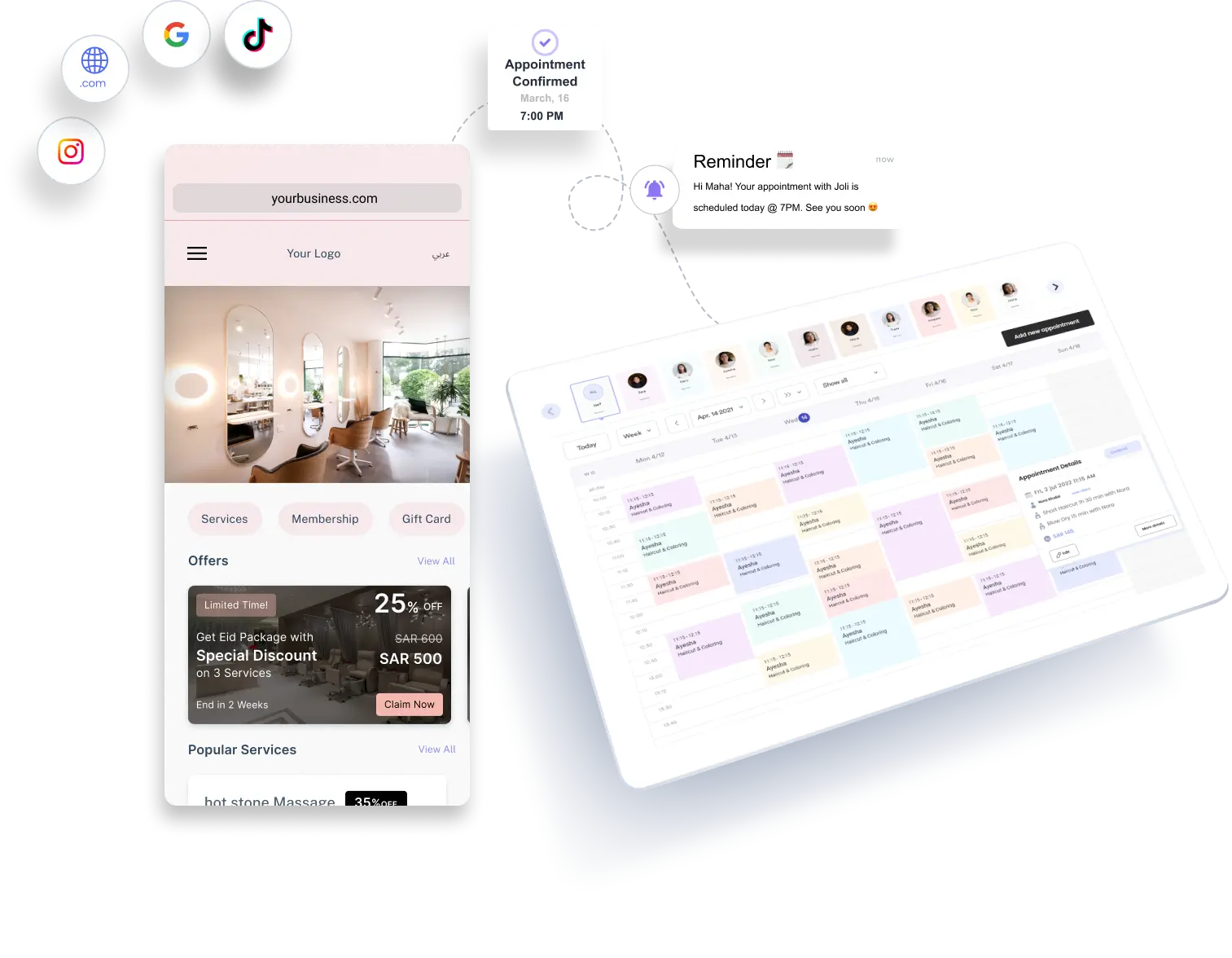
Naeeman includes tools for capturing and managing client intake information within each client’s profile:
- Digital intake forms: Send customizable forms to new clients via link before their appointment.
- Client profile notes: Capture consultation notes, preferences, and medical flags in the client record.
- Service history: Track all treatments and products used per client — building a rich history over time.
- Allergy and contraindication alerts: Flag client-specific sensitivities so your team sees them before every appointment.
🚀 Book a Naeeman Demo — discover how intake forms and client consultation data can be captured, stored, and used to deliver a more personalized service experience in your salon or spa.
Frequently Asked Questions
Are intake forms legally required for salons in Saudi Arabia?
Intake forms are not universally mandated by Saudi law for general beauty services, but they are strongly advisable for professional liability and client safety. For medical aesthetic and medspa services, documentation requirements are more stringent. Consult the relevant regulatory body for your service type.
When should a client fill in an intake form?
Ideally before their first appointment — sent via WhatsApp link when the booking is confirmed. This gives the client time to fill it in accurately at home rather than hurriedly at the salon.
How often should a client update their intake form?
Review key health information at every visit for chemical or medical services. Conduct a full re-intake annually or whenever a client reports a significant health change.
What information should I never store without client consent?
Any sensitive health or medical information should only be stored with the client’s explicit consent, which should be captured as part of the intake process. Ensure your data practices comply with relevant data privacy expectations in Saudi Arabia.
What happens if a client refuses to fill in an intake form?
You can decline to perform the service if the form is required for health and safety reasons — particularly for chemical treatments, laser services, or injectables. Explain the reason clearly and professionally. A client who refuses to disclose relevant health information creates liability for your salon.
A great service starts before the client sits in the chair. Book a Naeeman demo to see how digital intake forms and client consultation notes can help your salon deliver a more personalized, safer, and more memorable experience.
