
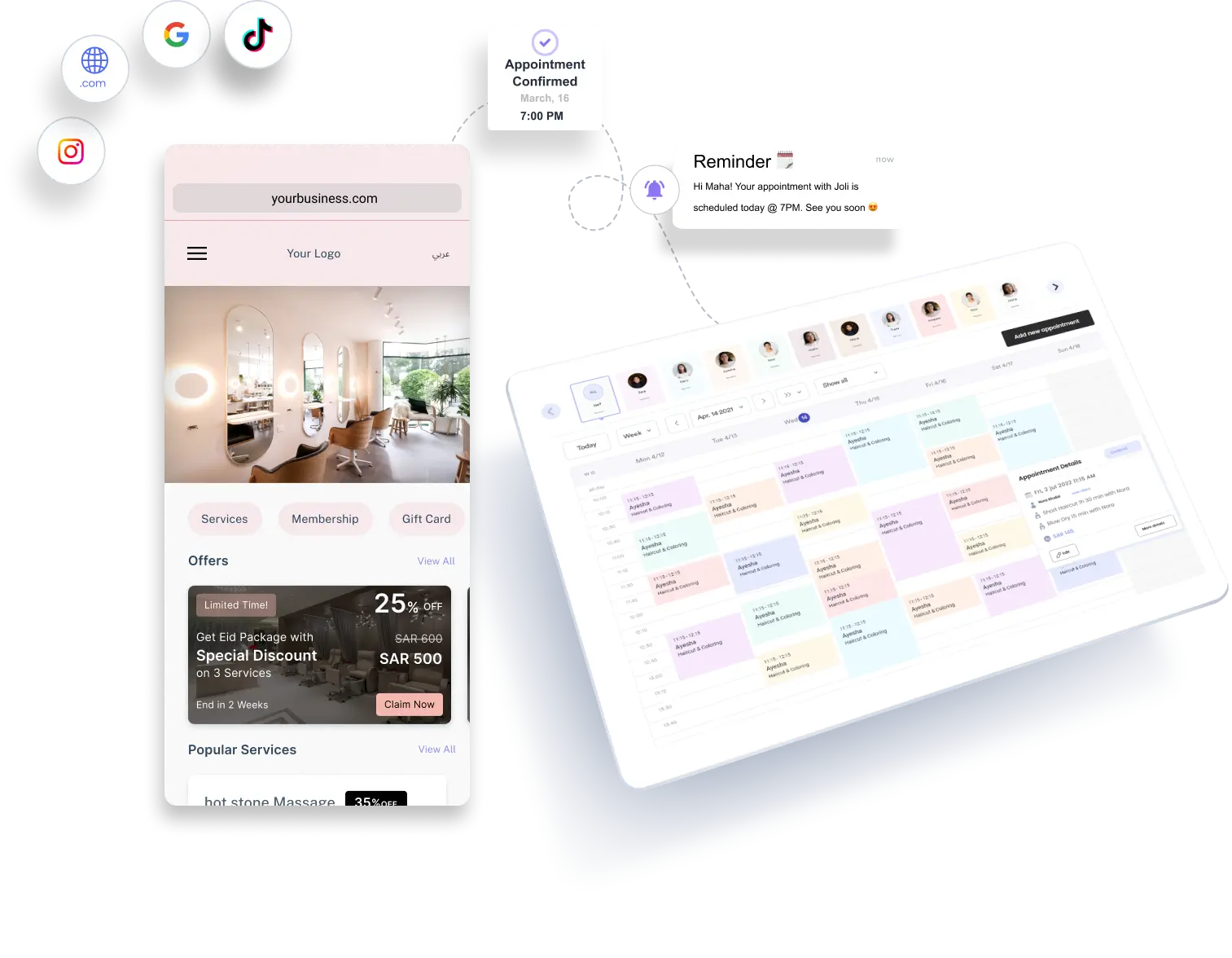
Being fully booked is a good problem to have — until you realize how many potential clients you are turning away. Every “sorry, we have no availability” is a potential client who will go to a competitor. If even 30% of those clients find an alternative they like, you have permanently lost part of your potential revenue.
A waiting list changes that equation. It turns “we are full” into “we have a spot for you the moment one opens up” — and when managed well, it converts cancellations and no-shows into filled appointments in real time.
This guide covers how to build, communicate, and manage a salon waiting list that actually works for Saudi salon and spa owners.
Why Most Salon Waiting Lists Fail
Most salons that attempt a waiting list abandon it within weeks. Common reasons:
1. It is run on WhatsApp or a written notepad.
There is no systematic way to notify people in order, track who is still interested, or fill a slot quickly. The receptionist ends up calling multiple people manually for each cancellation — taking 20 minutes to fill a 45-minute slot.
2. There is no clear process for how the list is managed.
What order do people get contacted in? Is it first-come-first-served? By preferred service? By time flexibility? Without rules, the list creates confusion and perceived unfairness.
3. The wait is too long to be useful.
A client who is added to a waiting list for a slot 4 weeks out and then contacted the morning of the opening with 2 hours’ notice will rarely be able to attend. Waiting lists work best for imminent openings.
4. Nobody follows up proactively.
A waiting list client who was not called when a spot opened — but sees the salon’s schedule open up online — will not try again.
How a Salon Waiting List Should Work
Step 1: Define the Scope of Your Waiting List
Your waiting list should cover:
- Specific services in high demand: If your balayage slots fill up weeks in advance but your nail services have availability, only put balayage on the waiting list. Do not create a general waiting list that is too vague to manage.
- A meaningful time window: A waiting list is most effective for the next 2–3 weeks. Beyond that, most clients will book elsewhere.
- Specific stylist requests if applicable: Some clients want a particular stylist. Track that preference.
Step 2: Capture Waiting List Requests Properly
When a client requests a service and you have no availability, capture:
- Client name and phone number
- Service requested
- Preferred stylist (if any)
- Time flexibility: “Can you come at any time?” vs. “Only evenings” vs. “Only Thursday”
- Best contact method: WhatsApp or call?
This information is essential to match a cancellation to the right waiting list client quickly.
📅 Related: How to Reduce Salon No-Shows →
Step 3: Set Notification Rules
Establish clear rules that your team follows every time a cancellation or reschedule opens a slot:
- Check the waiting list immediately when a cancellation is received.
- Match the slot to the right candidate based on service, stylist preference, and time flexibility.
- Contact the first matching client via WhatsApp — not a call (WhatsApp is faster to respond to and less intrusive in Saudi Arabia).
- Give a clear response window: “We have a slot available tomorrow at 3pm for your balayage. Can you confirm in the next 30 minutes?” If no response, move to the next client on the list.
- Remove confirmed clients from the list immediately.
💌 Related: WhatsApp Messages for Salons →
Step 4: Communicate Clearly When Adding Clients to the List
When you add a client to the waiting list, tell them exactly what to expect:
Sample WhatsApp message when adding a client:
“Hi [Name], we have added you to our waiting list for [service] with [stylist if applicable]. If a slot opens up in the next [timeframe], we will message you immediately. We recommend keeping [timeframe] as open as possible so you can respond quickly. We will do our best to find you a spot!”
This sets expectations and makes the client feel considered rather than dismissed.
Waiting List for Walk-ins vs. Future Appointments
The waiting list operates in two modes:
Mode 1: Same-Day Walk-in Wait
A client arrives without an appointment and you cannot accommodate them immediately. You add them to a same-day wait list and message them when a spot opens during the day.
- Give an honest estimate: “We expect a 45-minute to 1-hour wait.”
- Send a WhatsApp when their stylist is ready: “Your stylist is available now — please come in within 15 minutes.”
- If the client cannot make it within the window, move to the next name.
Mode 2: Future Date Waitlist
A client requests a future appointment and nothing is available. You log them for a specific date range and notify them when a cancellation opens.
Converting Waiting List Clients to Regular Bookers
A client who got a waiting list slot and had a great experience is more likely to book ahead next time — because they now know your salon fills up fast.
After their appointment:
- Send a follow-up thank you message.
- Offer to prebook their next appointment immediately: “We are usually fully booked 2–3 weeks out for [service]. Would you like to secure your next appointment now?”
- Add them to your proactive reminder list for their likely next service date.
🔗 Related: How to Increase Repeat Salon Clients →
Waiting List Metrics to Track
| Metric | What It Tells You |
|---|---|
| Waiting list size by service | Where your highest unmet demand is |
| Average wait-to-fill time | How quickly you convert cancellations |
| Waiting list conversion rate | What % of list clients actually book |
| Waiting list dropout rate | How many people find alternatives before being called |
If your conversion rate is low (clients are not responding when called), your notification window is probably too short. If your dropout rate is high, your average wait time is too long — you need more capacity in high-demand periods.
How Naeeman Supports Waiting List Management
Naeeman helps you manage waitlists alongside your live booking calendar:
- Waiting list logging: Add clients to a structured waiting list with service, stylist, and availability preferences captured.
- Cancellation alerts: Receive an immediate notification when a booking is cancelled, prompting the front desk to check the waiting list.
- WhatsApp integration: Notify waiting list clients directly from the platform when a matching slot opens.
- Conversion tracking: See which waiting list clients converted to bookings and which did not.
🚀 Book a Naeeman Demo — discover how your salon can manage waiting lists, cancellations, and client communication in one system.
Frequently Asked Questions
Should I charge for waiting list placement?
Generally no — charging for a spot on a waiting list can feel presumptuous and create friction. The exception is a deposit held for high-demand periods (pre-Eid, for example) that the client already knows about.
How many clients should be on my waiting list at one time?
Keep the list realistic for your actual cancellation rate. If you have 3–4 cancellations per week, a waiting list of 15–20 people is manageable. A list of 50 creates false expectations for most clients.
What if a client on the waiting list is never called?
Follow up at the end of each week and let clients know if they were not matched that week: “We were fully booked again this week without a cancellation — we will keep trying. Would you like to try booking for [next available date]?” This prevents silent dropout and shows the client you are managing their request.
Can a waiting list replace a proper booking system?
No. A waiting list is a supplement to online booking — not a replacement. It fills gaps created by cancellations. The primary booking strategy should still be advance online booking.
How do I avoid a client feeling like they are “on hold” indefinitely?
Set a clear time limit when you add them: “We will keep you on the list for the next 2 weeks.” If no slot opens in that window, check in and offer a confirmed future appointment.
Your fully-booked days do not have to mean lost clients. Book a Naeeman demo to see how smart waiting list management and WhatsApp notifications can fill every cancellation slot before it becomes lost revenue.
